
How to Choose & Buy Aluminum Fence Supplies: A Complete Guide
Having the right supplies and materials is a must for any project, especially when it comes to building and installing a sturdy, high-quality aluminum fence. Buying the right aluminum fence supplies doesn’t have to be overwhelming, but it does require proper planning, accurate measurements, product knowledge, and an understanding of installation basics.
If you’re a homeowner, contractor, property manager, or DIY enthusiast preparing to invest in aluminum fencing, this guide walks you through the entire purchasing process, from identifying the exact supplies you need to choosing the right style and avoiding common mistakes. Think of this as your roadmap to confidently and efficiently procure everything required for a successful aluminum fence project.
Ready to elevate your property with durable, attractive aluminum fencing? Read on!

Why Aluminum Fencing Is a Popular Choice
Aluminum fencing offers a combination of aesthetic appeal and durability with minimal maintenance, making it one of the most cost-effective fencing solutions available. It has surged in popularity in recent years for residential and commercial applications alike. Here's why:
Benefits of Aluminum Fencing
- Rust‑Resistant & Weatherproof: Aluminum won’t corrode like steel or steel alloys and holds up beautifully against rain, salt air, humidity, and snow.
- Low Maintenance: You’ll never need to stain, paint, or seal your aluminum fence. Occasional cleaning is generally all that’s required.
- Strong & Lightweight: Aluminum delivers strength comparable to wrought iron but weighs considerably less, making it easier to install.
- Attractive Finish Options: Powder‑coated finishes provide consistent color that resists fading, chipping, and scratching.
- Long‑Term Value: The combination of durability and minimal upkeep reduces lifetime costs.
Aluminum vs Wood, Vinyl, and Wrought Iron
When evaluating fencing options, it helps to understand how aluminum stacks up:
- Aluminum vs Wood: Wood fences offer privacy but require regular staining/painting and are prone to rot and insect damage. Aluminum is maintenance‑free and won’t deform under weather stress.
- Aluminum vs Vinyl: Vinyl is low maintenance but can warp in extreme temperatures and lacks the strength aluminum provides. Aluminum resists impact and doesn’t sag.
- Aluminum vs Wrought Iron: Wrought iron is strong but rust‑prone, heavy, and costly. Aluminum offers similar strength, better weather resistance and lower cost.
Residential vs Commercial Applications
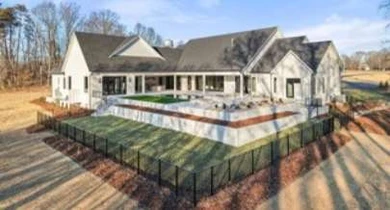
Aluminum fencing is effective for both residential and commercial use. For homeowners, aluminum offers a polished look that can complement architectural styles from traditional to contemporary. Common residential uses include fencing for property boundaries, pool enclosures, decorative garden perimeters and pet enclosures.
For commercial properties, aluminum fence panels provide security and style for spaces such as office complexes, schools and recreation centers, condominium and HOA properties, parking lots and gated facilities. Because aluminum is adaptable in height and style, it suits diverse applications, from a 3’ decorative perimeter fence to a 6’ security barrier.
What Supplies Are Needed for an Aluminum Fence?
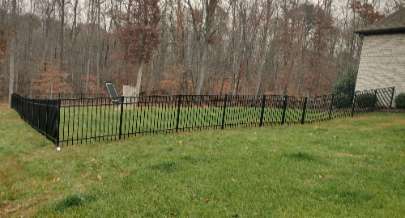
As you begin planning your fencing project, it’s important to understand what components you’ll need for a complete aluminum fence installation. A typical aluminum fence project requires more than just panels. You’ll need posts, gates, brackets, anchoring hardware, and more. Explore our comprehensive aluminum fence supply checklist below so you can shop with confidence.
Fence Panels
Aluminum fence panels make up the bulk of your fence. Panels are pre‑assembled sections, available in various heights and styles. Choosing the right panels from Folsom's selection impacts both the look and functionality of your fence.
When choosing panels, there are several important considerations to keep in mind. You'll need to select the correct panel height (e.g., 36”, 48”, 54”, 60”, and 72”) for your property, and the picket spacing. Finally, you'll need to select the top style; fence panels typically come in a two-rail smooth top or an ornamental spear point top.
Fence Posts
Fence posts support your panels and determine structural integrity. Types include line posts, terminal/end posts, corner posts, and gate posts.
For aluminum fencing, choose posts that match your panel style and finish to ensure seamless lines. Posts must be appropriately sized for your panel height and spacing and should be installed plumb and level for a secure fence.
Gates and Gate Hardware
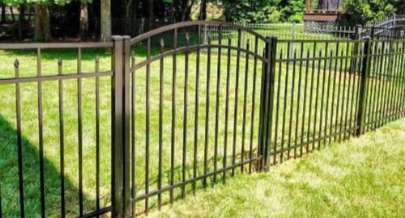
No fence is complete without access points. Aluminum gates should be purchased to match your panel style and dimensions. Key gate components include the gate frame and pickets, latch hardware, gate stops and reinforcement brackets, and hinges rated for use in aluminum fencing.
Whether you require a single‑gate entry or a wide‑opening double gate for vehicles, plan your gate purchases based on opening width and traffic needs.
Rails and Brackets
Rails (top and bottom) provide structural support for the panels. Brackets and connectors link rails to posts and secure panels in place. Be sure to select rail sizes and bracket kits compatible with your specific aluminum panel and post system.
Fasteners and Anchoring Materials
While aluminum fencing systems are designed to minimize welding and field cutting, you still need quality fasteners and anchors, including:
- Self‑tapping stainless screws
- Anchor bolts (for concrete pads)
- Concrete and post‑hole backfill material
- Bit sets for drilling aluminum
Folsom Fence Supply stocks a range of hardware and accessories. With the right supply list in hand, you’ll avoid mid‑project delays and ensure your installation is smooth.
How to Calculate Aluminum Fence Panel Cost
Budgeting for an aluminum fencing project begins with understanding how much material you need and what it will cost. While products vary in price based on style and finish, accurate measurements allow you to generate a precise materials list and cost estimate.
Measuring Your Property
To calculate how much fence material you need, walk the perimeter of your property with a measuring wheel or tape to measure the full perimeter where the fence will be installed. Record the dimensions, and break your measurements into straight sections between corners, gates, or obstacles. Measure gate openings separately.
Once you've finished measuring, write down your total linear footage. This figure is the basis for all material calculations.
Calculating Aluminum Panel Quantities
Once you know your total fence line length, calculate how many panels you need. Most standard aluminum panels come in 6’ widths, while heavy‑duty or commercial panels are often 8’ wide. So, if you have 120 feet of fence line and use standard 6’ panels, you’ll need 20 panels, calculated by dividing 120 by 6.
Always round up to ensure you have enough material, and account for waste or cutting adjustments.
Determining Post Placement
Fence posts are typically spaced the width of your panels plus a small gap for brackets. So for a standard 6' panel, you'd need a post every 6 feet plus the length of the bracket spacing. Corner posts and end posts are exceptions and should be counted separately.
Planning for Gates and Corners
Measure gate openings and subtract this distance from your total fence line before calculating panel quantities. Corners don’t reduce panels but require additional corner posts.
For example, if you need a 4’ pedestrian gate and a 10’ double vehicle gate in a 120’ perimeter, subtract 14’:
120 - 14 = 106 linear footage for panels
106 ÷ 6 = 17.67 → round up to 18 panels
Then add posts for gate framing.
Knowing how to calculate your supplies ensures you purchase the right quantities and can accurately project the per‑foot cost of aluminum fencing before ordering.
If you'd rather not measure and calculate manually, you can also try an online fence estimator tool like this one from our sister company, Diversified Fence Builders.
Choosing the Right Aluminum Fence Style
Aluminum fencing isn’t one‑size‑fits‑all. Different applications call for different panel styles, picket spacing, and design elements. Your choice affects aesthetics, functionality, privacy, safety, and cost.
Here’s how to think through your style options.
Privacy vs Decorative Fencing
Aluminum fencing can be decorative, with open picket styles that allow visibility, or privacy‑oriented, with closer picket spacing or privacy inserts. Decorative fencing enhances curb appeal and defines boundaries without fully blocking the view. Privacy fencing offers seclusion, wind protection, and noise reduction.
Pool‑Safe Aluminum Fencing
For pool areas, aluminum fencing provides a safe and code‑compliant solution that's sure to meet local pool barrier requirements. Pool fence options often include minimum height specifications (commonly 4’ or higher), continuous vertical pickets with maximum spacing (to prevent climbing), and secure self‑latching gates.
Always verify your municipality’s pool fence regulations when planning your purchase.
Flat Top vs Spear Top Styles
Your fence's top profile defines its visual style. A fence built with flat top panels offers clean, modern lines and a minimalist appearance. Spear top panels are ornamental points that add a decorative, classic look and enhanced deterrence at the top. Each style fits different architectural aesthetics. Choose based on both design preference and functional needs.
Rackable Panels for Sloped Yards
If your terrain isn’t flat, consider rackable aluminum panels. These panels pivot slightly at the rails to follow grade changes, reducing the need for stepped installations and providing a more uniform appearance on slopes.
Common Mistakes to Avoid When Buying Aluminum Fence Panels
Investing in aluminum fencing supplies is a smart move, but only if you avoid the most common pitfalls that slow down projects or cause costly errors.
Incorrect Measurements
Nothing undermines a project like flawed measurements. Bad measurements can lead to ordering too few materials, which can cause delays, or ordering too many materials adds unnecessary expense. That's why it's good to always measure twice (or more, factor in gates, corners, slopes, and offsets, and account for fencing setbacks from property lines.
Buying Incompatible Components
Not all panels, posts, rails, and hardware are interchangeable. Make sure every component you purchase works together. Avoid mixing brands or incompatible systems, and purchase complete kits or verify compatibility before ordering.
Ignoring Local Codes
Fencing regulations vary by city, county, and HOA. Building without checking codes can lead to expensive rework. Depending on where your property is located, you may need to account for height restrictions, setback requirements, pool safety codes, public right-of-way rules, and other factors. Consult with local authorities or building inspectors before ordering supplies.
Choosing the Wrong Grade Fence
Aluminum fencing comes in different wall thicknesses (gauges) and structural weights. Residential fencing typically uses a standard gauge, while commercial or high‑security applications may require heavier‑duty sections. Understand your performance needs upfront to avoid choosing a fence that’s too light for its intended purpose.
Questions to Ask Before Purchasing Aluminum Fence Supplies
Before you buy, have a clear conversation with your supplier. Asking the right questions ensures you get exactly what you need:
- What grade of aluminum is used?
- Is the fence powder‑coated, and what color options are available?
- Are gates included or sold separately?
- What warranty is offered on materials and finish?
- Are installation instructions or support provided?
- Is the fence rackable for slopes?
- What additional tools or hardware will I need?
These questions not only clarify product expectations but also help to establish trust with your supplier.
Aluminum Fence Panel Dimensions (Most Popular)
Understanding standard dimensions can help you to visualize your project and calculate the material needs.
Width
- Standard Panels: 6 feet
- Heavy‑Duty/Commercial Panels: 8 feet
Height
Common heights include: 36”, 48”, 54”, 60”, & 72”.
- 36” (3 feet): Ideal for purely decorative boundary lines.
- 48” (4 feet): The standard choice for residential yards and pool-safe requirements
- 54” (4.5 feet): Provides an elegant balance of security and privacy emphasis.
- 60” & 72” (5–6 feet): Heavy-duty heights utilized for security and commercial applications.
Most residential and pool applications use 4’ or 5’ panels.
Picket Spacing
- Standard: 3‑13/16” spacing
- Double Picket: 1‑5/8” spacing for increased privacy and security
- Smooth Puppy / Spear Puppy: This style features an additional rail, standard spacing above the 3rd rail, and double spacing below. It's ideal for containing small pets.
Knowing these dimensions upfront enables faster, more accurate product selection.
Where to Buy Quality Aluminum Fence Supplies
Choosing a reputable supplier is just as important as selecting the right fence. Quality products, dependable customer service, and reliable support can make or break a fencing project. You'll want to work with a trusted source that can deliver a consistent product to verified specifications. They should offer responsive support for quoting and ordering
Look for a Trusted Source
- Product consistency and verified specifications
- Customer reviews and testimonials
- Responsive support for quoting and ordering
Shipping & Logistics
Ensure your supplier:
- Offers protected packaging
- Provides reliable delivery timelines
- Communicates tracking information
Warranty & Support
Aluminum fencing is a long‑term investment. Choose suppliers who stand behind their materials and finishes with meaningful warranties and support resources.
Installation Resources
Even if you’re a DIY enthusiast, access to installation guides, videos, and expert advice can significantly improve your project outcome.
Fortunately, your search for a reliable fencing partner can be brief. Folsom Fence Supply checks all the boxes and more, with high-quality products made in-house, exceptional customer service, and a robust warranty policy that delivers peace of mind so you can invest in your fence with confidence.
Ready to Move Forward?
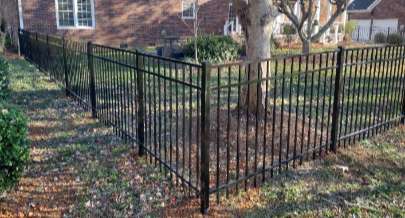
Now that you understand what aluminum fence supplies you need, how to measure and cost your project, and how to choose the right style, it’s time to take action.
Get the supplies and support you deserve. Contact the team at Folsom Fence Supply today for expert guidance, accurate quotes, and dependable service. Whether you’re installing your first aluminum fence or managing multiple properties, we’re here to help you succeed.
Frequently Asked Questions:
What heights can I choose from for my aluminum fence?
Aluminum fences are designed to come in heights of 36”, 48”, 54”, 60”, & 72”.
What size picket spacing do aluminum fence panels come with?
Standard Picket spacing is 3-13/16”. Double Picket spacing is 1-5/8”. Smooth Puppy and Spear Puppy Picket styles incorporate an extra rail and combine the standard spacing above the 3rd rail with double spacing below the 3rd rail. Double Picket and Puppy Picket are great options for small pets.
What supplies are needed to install an aluminum fence?
Most aluminum fence installations require fence panels, posts, gates, brackets, fasteners, anchors, and installation tools.
How do I calculate how much aluminum fencing I need?
Measure the perimeter of the installation area and divide by the panel width to estimate panel quantities and post spacing.
Is aluminum fencing better than wrought iron?
Aluminum fencing offers a similar appearance to wrought iron while being lighter, rust-resistant, and lower maintenance.
How long does aluminum fencing last?
High-quality aluminum fencing can last for decades with minimal maintenance thanks to its rust-resistant, powder-coated construction.
Can aluminum fencing be installed on slopes?
Yes. Many aluminum fence systems use rackable panels designed to follow uneven terrain.
What is the best grade of aluminum fencing?
Commercial-grade aluminum fencing is thicker and stronger, while residential-grade fencing is more budget friendly and suitable for most homes.
Does aluminum fencing rust?
No. Aluminum fencing is naturally rust-resistant and performs well in various weather conditions.
Are aluminum fence supplies easy to install?
Many aluminum fence systems are designed for DIY-friendly installation, though larger projects may benefit from professional installation.